
Last updated November 17, 2026
 Hardwood
 Engineered hardwood
 Luxury vinyl plank
 Laminate
 Porcelain tile
 Carpet
 Shaw
 Mohawk
 COREtec
 Pergo
Free in-home measure and written estimate: Shaw, Mohawk, COREtec and Pergo lines compared on your own rooms, with carpet, tile, vinyl plank, laminate and hardwood laid out side by side
Get your free estimateWhat Happens at a Free In-Home Flooring Estimate in Boulder City
Most homeowners judge a flooring estimate by the number at the bottom of the page. That’s backward. The number is only as good as what the estimator saw before writing it. If someone walks through your rooms, measures square footage, and hands you a per-foot price without lifting a corner of the old carpet or checking what’s underneath, you’ve been given a guess with a decimal point. In Boulder City, where homes range from mid-century block construction to newer builds on graded lots, what’s under the floor matters as much as what goes on top. This guide walks through what a thorough in-home estimate actually looks like, the questions a good estimator asks, the technical checks that separate a real assessment from a sales call, and what a complete written estimate should contain before you commit to anything.
Quick Answer
A free in-home flooring estimate in Boulder City is a scheduled visit where an estimator measures your rooms, inspects the subfloor and moisture conditions, checks door clearances and transition points, asks how you use the space, and then writes a line-item price covering material, labor, prep, and disposal. It typically takes 45 minutes to an hour and a half depending on how many rooms are involved. You leave with a written quote, not a verbal ballpark, and the price on that quote is what you pay unless the estimate visit missed something the installer later finds.
Styles & brands we work with
- Hardwood
- Engineered hardwood
- Luxury vinyl plank
- Laminate
- Porcelain tile
- Carpet
- Shaw
- Mohawk
- COREtec
- Pergo
Table of Contents
- Why the Estimate Visit Matters More Than the Price
- What a Qualified Estimator Examines Beyond Square Footage
- The Questions a Good Estimator Asks You
- How to Test the Company’s Knowledge During the Visit
- What a Complete Written Estimate Includes
- Specialist vs. Big-Box: How the Recommendation Process Differs
- Boulder City Conditions That Shape an Estimate
- What Happens After the Estimate
Why the Estimate Visit Matters More Than the Price
The estimate is the only point in a flooring project where someone stands in your actual rooms, looks at your actual conditions, and commits to a number in writing. After that, everything is execution. If the estimate was thin, the execution gets expensive, because the installer discovers the problem the estimator should have caught, and someone has to absorb the difference. That someone is usually you.
Here’s the part most homeowners don’t think about. A flooring quote has two halves: the material and the labor. Material is predictable. Labor is where the surprises live, and labor surprises almost always trace back to something a proper estimate would have found. A spongy spot in the subfloor. A slab that reads damp. A doorway where the new floor thickness won’t clear the bottom of the door. A transition between two rooms that was never going to line up without extra work.
None of those are unusual in Boulder City. Homes here span a wide range of construction eras, and each era brought its own subfloor conventions, its own approaches to grading and drainage, and its own ideas about vapor control. An estimator who knows the local housing stock knows what to look for. An estimator who doesn’t is measuring rooms, not assessing a job.
A free estimate costs you nothing but the appointment. A bad estimate costs you the difference between the quoted price and the real price, plus whatever schedule disruption comes with it. That asymmetry is the whole argument for treating the estimate as the most important hour of the project.
What a Qualified Estimator Examines Beyond Square Footage
Square footage is the starting point, not the assessment. A thorough estimator at a Boulder City Flooring estimate walks through the home looking at five specific things, and you can watch for each one.
1. The subfloor material and its condition
What’s under the existing floor determines what prep work the new floor needs. The estimator should identify whether you have a plywood or OSB subfloor over a framed floor, or a concrete slab, and note the condition of either. Soft spots, delamination, previous water staining, patched areas, and unevenness all get recorded. On a slab, the estimator should look for cracks, curling at the edges, and any sign of prior moisture movement.
2. Existing moisture levels
Moisture is the single most common reason a new floor fails early, and it’s invisible until it isn’t. A proper estimate includes a moisture check appropriate to the subfloor type, with readings taken in more than one spot. In Boulder City’s dry climate, homeowners often assume moisture isn’t a concern, but slab moisture, plumbing leaks that were repaired without the subfloor being fully dried, and irrigation or grading issues against the exterior wall all show up in the readings. The product you choose and the prep underneath it depend on those numbers.
3. Door clearances and trim
New flooring has thickness. Sometimes it’s very close to the old flooring’s thickness. Sometimes it isn’t. The estimator should check the gap under each door that opens onto the flooring area, and note where doors will need to be trimmed or where trim will need to come off and go back on. This is a small line item individually and a meaningful one across a whole home.
4. Transition points
Every room boundary is a decision. Where the new floor meets a different existing floor, a doorway, a stair nosing, a sliding door track, or a fireplace hearth, the estimator notes how the transition will be handled and includes the necessary pieces in the quote. Transitions that get discovered at install time are transitions that get improvised.
5. Natural light exposure
Which rooms get direct sun, and for how long, affects both product recommendations and how a color will actually look once installed. A sample that reads warm under showroom lighting can read very differently in a south-facing room with full afternoon sun. In a high-desert climate with a lot of clear days, this matters more than homeowners expect.
The Questions a Good Estimator Asks You
An estimate is a two-way conversation. The estimator examines the house, but they should also be examining how you live in it, because that’s what determines which products make sense. If an estimator never asks you anything beyond “what are you thinking,” they’re taking an order, not building a recommendation.
Here are the questions a thorough estimator asks, and what the answers change:
- Do you have pets, and what kind? Claws and accidents affect which products hold up and which ones you’ll regret. Pet owners often get pointed toward water-resistant options like LifeProof or a rigid-core product, but the right answer depends on the specifics.
- Any kids, and what ages? A toddler’s spill radius and a teenager’s bedroom traffic are different problems. Carpet in a playroom and carpet in a hallway wear very differently.
- Where does water show up? Kitchens, bathrooms, laundry rooms, entryways from a pool or garden, and anywhere a pet bowl lives. Moisture-prone rooms narrow the field quickly.
- How long do you plan to stay? A five-year horizon and a twenty-year horizon point at different products and different budgets.
- What’s the budget range you’re working with? A good estimator asks this early, because it prevents wasted time on products that were never in contention.
- What’s under the current floor, if you know? Previous renovations, additions, and any history of leaks or repairs are useful context.
- What do you dislike about the current floor? Cold, noisy, stained, dated, hard to clean. Each complaint maps to a different product priority.
- Are you doing one room or the whole house? Whole-home projects raise sequencing questions, transition questions, and phasing questions that a single-room job doesn’t.
If an estimator skips most of this, you’re getting a price, not a plan. That’s a signal worth paying attention to.
How to Test the Company’s Knowledge During the Visit
You don’t need to be a flooring expert to tell whether you’re talking to one. A few well-chosen questions will surface the difference between someone who knows the products and someone who knows the price sheet.
Ask what they’d recommend for your specific conditions, and why
Not “what’s popular.” Ask what they’d put in your particular rooms given what they just saw and what you just told them, and listen to the reasoning. A specialist will tie the recommendation to your answers: the dog, the south-facing window, the slab, the budget. A salesperson will tie it to whatever they’re currently pushing. Follow up with “what would you not put here, and why?” A real answer to that question is worth more than any brochure.
Ask how they handle the transition between two specific rooms in your home
Pick two adjacent rooms with different flooring and ask how they’d handle the seam. The answer should be specific: what piece, what height difference, what happens at the door jamb. Vague answers here usually mean the transition wasn’t going to get planned until install day.
Ask what happens if the installer finds something the estimate didn’t
This is the question that reveals how a company operates. The answer you want is a clear process: work stops, you’re contacted, the additional cost is explained and approved in writing before anything proceeds. The answer you don’t want is “that doesn’t happen” or “we’d work it out.”
Ask about the brands and where each one fits
If you’re considering carpet, ask how they’d compare a Shaw product to a Mohawk product for your rooms. If tile is on the table, ask what Daltile brings to a residential install that a general flooring supplier doesn’t. If resilient flooring is in the mix, ask where Mannington or Armstrong fits against a luxury vinyl option. A company that carries multiple brands and actually knows them will answer with nuance. A company that carries one brand will answer with a sales pitch.
What a Complete Written Estimate Includes
A verbal quote is a conversation. A written estimate is a contract-to-be, and it should be detailed enough that you can compare it line by line against another company’s estimate and see exactly where the differences are. Here’s what a complete one contains.
- Room-by-room measurements. Square footage for each space, listed separately, not one lump total.
- The specific product, by brand and line. Not “carpet” but the brand, the product line, and the color or style you selected. This is where you’ll see Shaw, Mohawk, or another of the nine brands we carry named directly.
- Material cost. Broken out from labor so you can see what you’re paying for what.
- Labor cost. Itemized by task where it varies: install, tear-out, prep, trim work.
- Subfloor prep. Patching, leveling, or repair identified during the estimate, priced separately so it’s visible.
- Old flooring removal and disposal. Hauling is real work and should be a line item, not an unspoken assumption.
- Transitions, trim, and stairs. Each priced, since these are where quotes most often diverge between companies.
- What’s excluded. A good estimate tells you what it does not cover. Moving furniture, appliances, and any work outside the scope should be either listed or explicitly excluded.
- The written total, with the note that this is the price. The estimate sets the final number. Any change requires your approval before work continues.
If a quote arrives as a single number with a handshake attached, ask for the itemized version. A company that can produce it should. A company that can’t has told you something useful.
Specialist vs. Big-Box: How the Recommendation Process Differs
The in-home estimate itself is similar in format wherever you get it. What changes is what the estimator can recommend, because that’s a function of what products the company can actually order.
A big-box store carries a narrow slice of the market. That’s not a knock on the stores; it’s just how their model works. When the only carpet available in the building is one or two brands, every recommendation lands on one of those brands, whether or not it’s the right fit for your dog, your budget, or your sun exposure. The recommendation follows the inventory.
A flooring specialist carrying nine nationally recognized brands has room to match the product to the conditions. Carpet from Shaw or Mohawk. Tile from Daltile, which brings dedicated tile-industry depth rather than treating tile as an add-on to a carpet business. Resilient flooring from Mannington or Armstrong. Rigid-core and water-resistant options like LifeProof or COREtec for the rooms where moisture is a real consideration. The estimator isn’t steering you toward a brand because that’s what’s on the shelf. They’re steering you toward a brand because it fits.
There’s a second difference that matters on multi-room projects. When carpet, tile, and hardwood refinishing all come from one source, you’re not coordinating three separate contractors with three schedules and three sets of assumptions about who handles the transition at the doorway. One company, one estimate, one point of accountability across the whole project. For a whole-home flooring upgrade, that’s worth more than it sounds.
If you want to see what carpet installation looks like as a scoped service, that’s a useful comparison point against a general quote.
Boulder City Conditions That Shape an Estimate
Local conditions are not background color. They’re inputs to the estimate, and a good estimator treats them that way.
Climate. Boulder City sits in high desert, which means low humidity most of the year, wide swings between day and night temperatures, and a lot of intense sun. Low humidity is generally friendly to flooring, but it makes acclimation and installation timing matter, and it means the product instructions control how long materials need to sit in the home before install. That’s a product-and-home question, not a fixed number. Intense sun through large windows fades and heats floors differently than in cloudier climates, which is why the estimator checks sun exposure before recommending a color.
Housing stock. Boulder City has a mix of construction eras, and the subfloor story varies by era. Historic homes near the downtown core may have older framing, previous renovations layered on previous renovations, and subfloors that need careful inspection. Newer construction on graded lots brings its own questions about slab moisture and drainage. An estimator who has worked across both types knows which questions to ask in which house.
Tile as a real category. Tile flooring is everywhere in this region, in kitchens, bathrooms, entries, and living areas, for good reason. It handles the climate and the traffic. A precise tile flooring installation estimate accounts for substrate condition, which tile work is especially sensitive to, and for the layout and cuts that determine how the finished floor actually looks. Tile is also the category where a generalist most often falls short, because tile rewards dedicated experience.
Hardwood restoration in an older home. Some Boulder City homes have original hardwood under carpet or tile, and refinishing it is often a better move than replacing it. Whether a floor can be refinished depends on the thickness of the wood and its condition, and that gets checked at the estimate, not promised over the phone.
If you’re still getting oriented on the area itself, the guide to Boulder City is a reasonable place to start.
What Happens After the Estimate
The estimate ends with a written price in your hands and no obligation to book anything. If you decide to move forward, here’s the sequence.
- You review the estimate and ask questions. Anything unclear gets clarified before you commit. There’s no reason to sign something you don’t fully understand.
- You select the final product and confirm the scope. Color, style, brand, and which rooms are in. This is where the estimate becomes an order.
- The install day is scheduled. The schedule is set at the estimate and confirmed afterward. Flooring is a scheduled job, not a same-day drop-in, so the date is agreed in advance based on the scope.
- Material arrives and acclimates per the product instructions. How long depends on the product and your home’s conditions. The product guidelines govern it.
- Install day. Prep, then install, then transitions and trim, then cleanup and haul-away of the old material.
- Walkthrough. You look at the finished work with the installer before the job closes out.
If you choose not to book, that’s a fine outcome too. You’ve learned what’s under your floor and what the work actually involves, which makes the next estimate you get easier to evaluate.
Common Mistakes to Avoid
- Choosing on price alone. The lowest quote is often the one that excluded subfloor prep, disposal, or transitions. Two sentences later, those items reappear as change orders. Compare itemized estimates, not totals.
- Skipping the moisture check. In a dry climate it’s tempting to assume moisture isn’t a factor. Slab moisture and old leaks don’t care about the climate. If the estimator doesn’t check, ask why.
- Not asking what the estimate excludes. Furniture moving, appliance disconnection, and baseboard work all get handled differently by different companies. Get the exclusions in writing.
- Ignoring door clearances until install day. New floor thickness plus an unchanged door equals a door that doesn’t close. This is cheap to plan for and annoying to discover.
- Overlooking sun exposure when picking a color. A high-desert afternoon can make a sample look like a different product in your room than it did in the store. Look at samples in your actual light.
- Accepting a verbal quote on a multi-room job. The more rooms and the more transitions, the more a verbal number can drift. Written and itemized, every time.
- Not checking the company’s process for surprises. Ask directly what happens if the installer finds something the estimate missed. The answer tells you how the company operates when things get complicated.
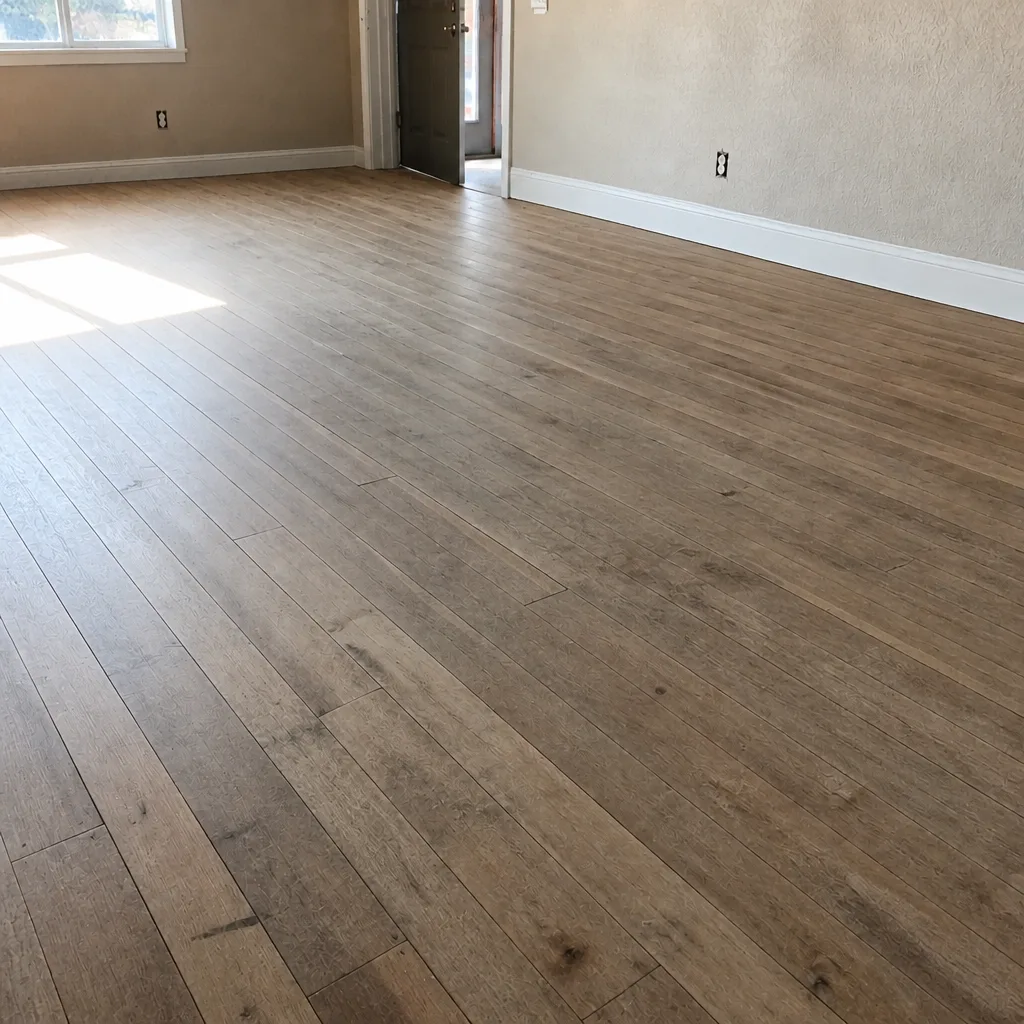
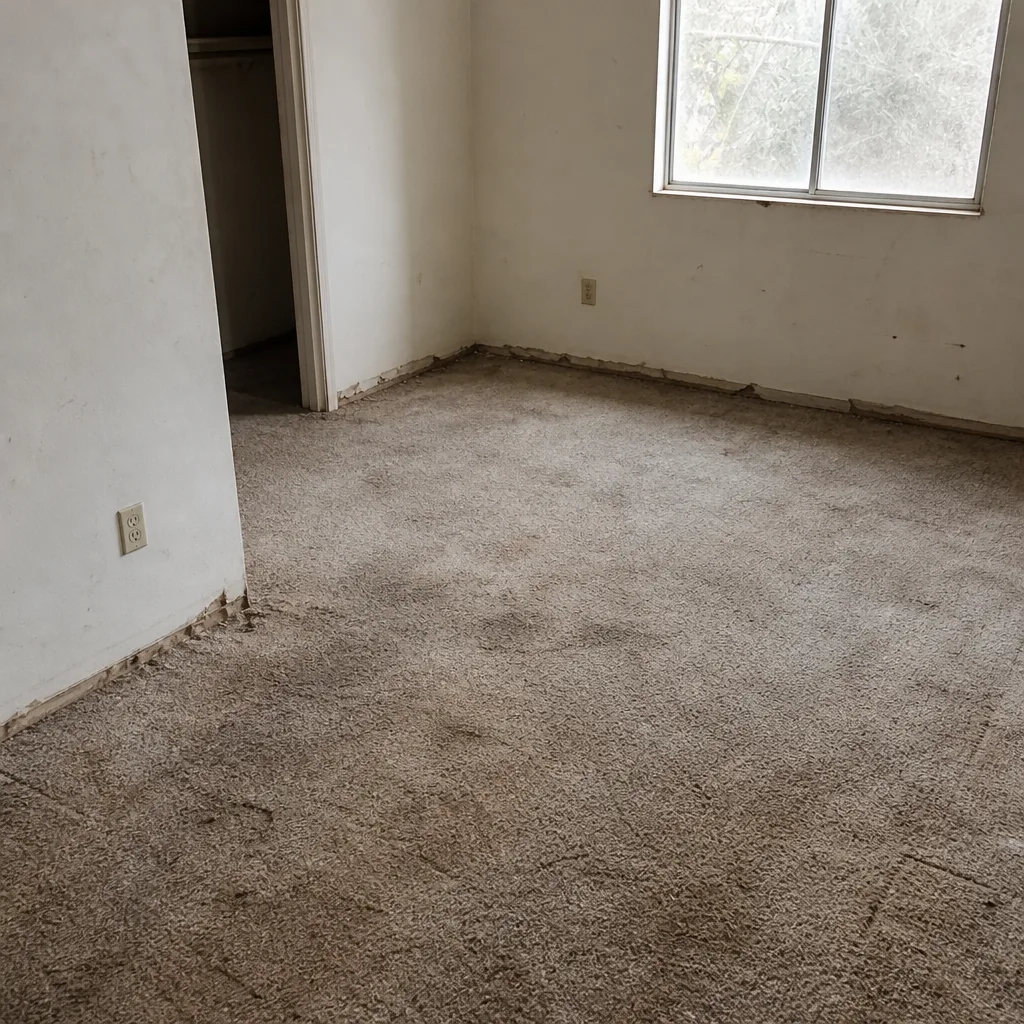
See the difference
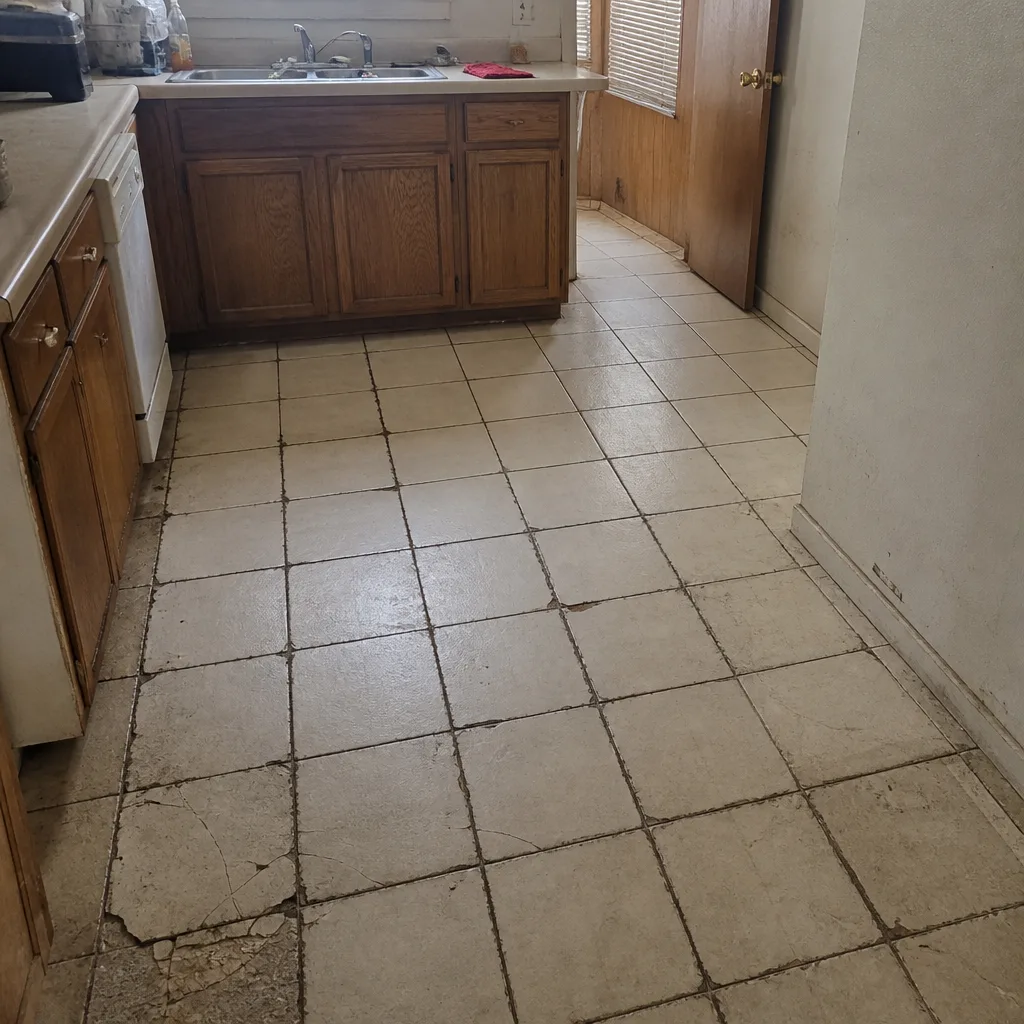 Before
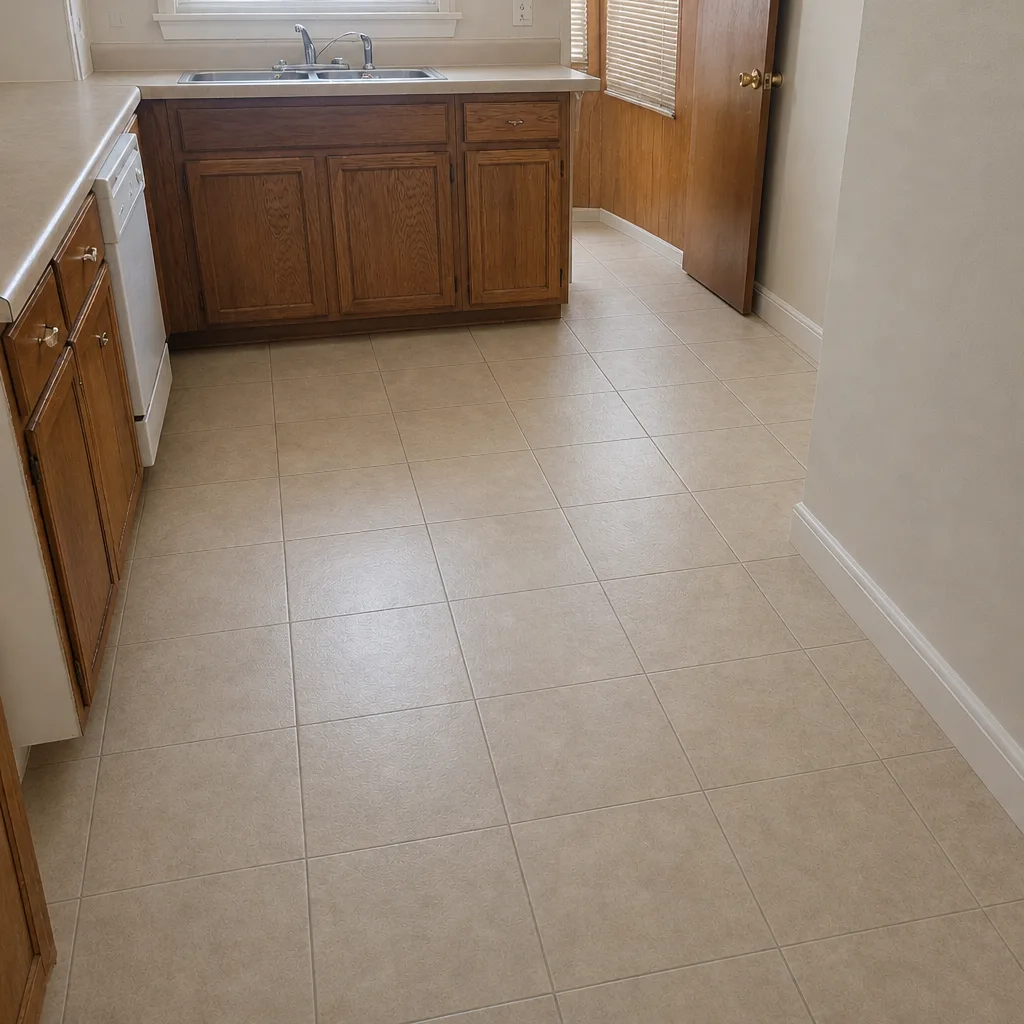 After
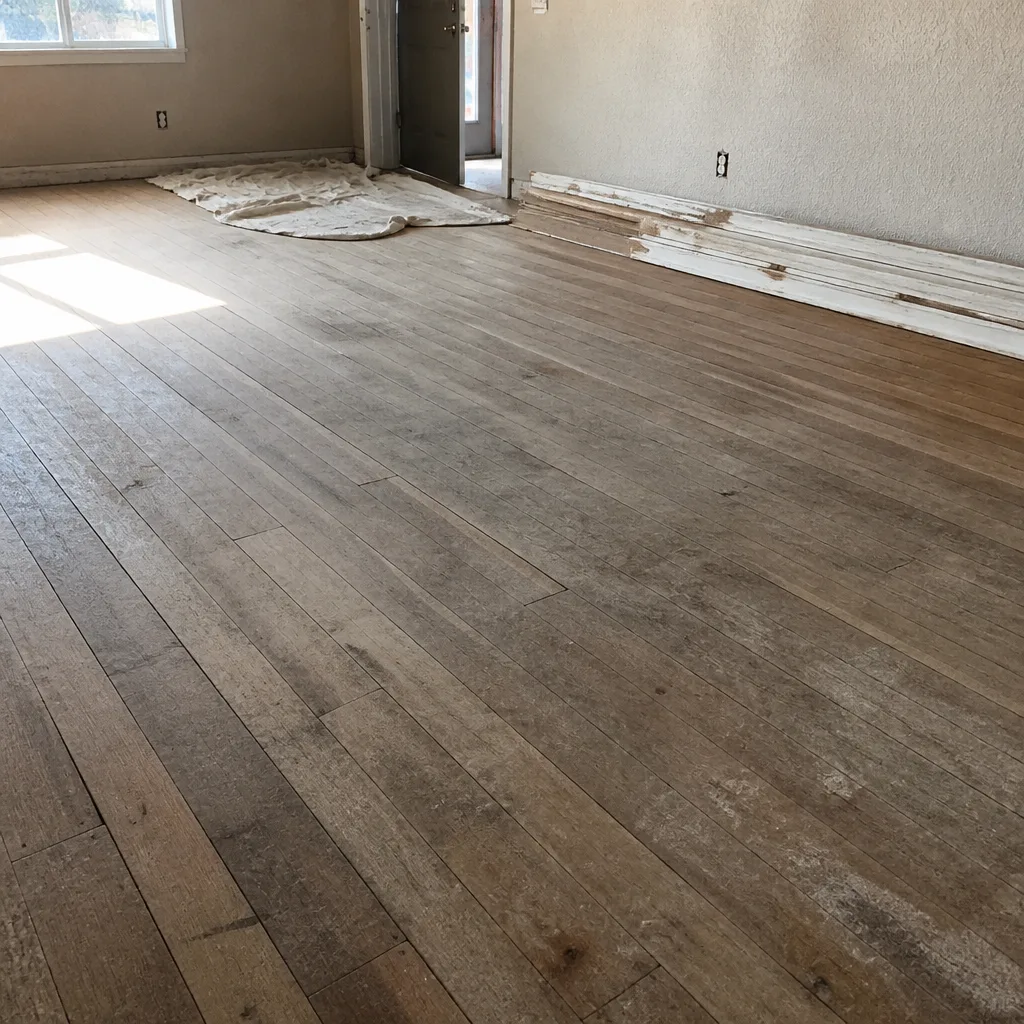 Before
 After
 Before
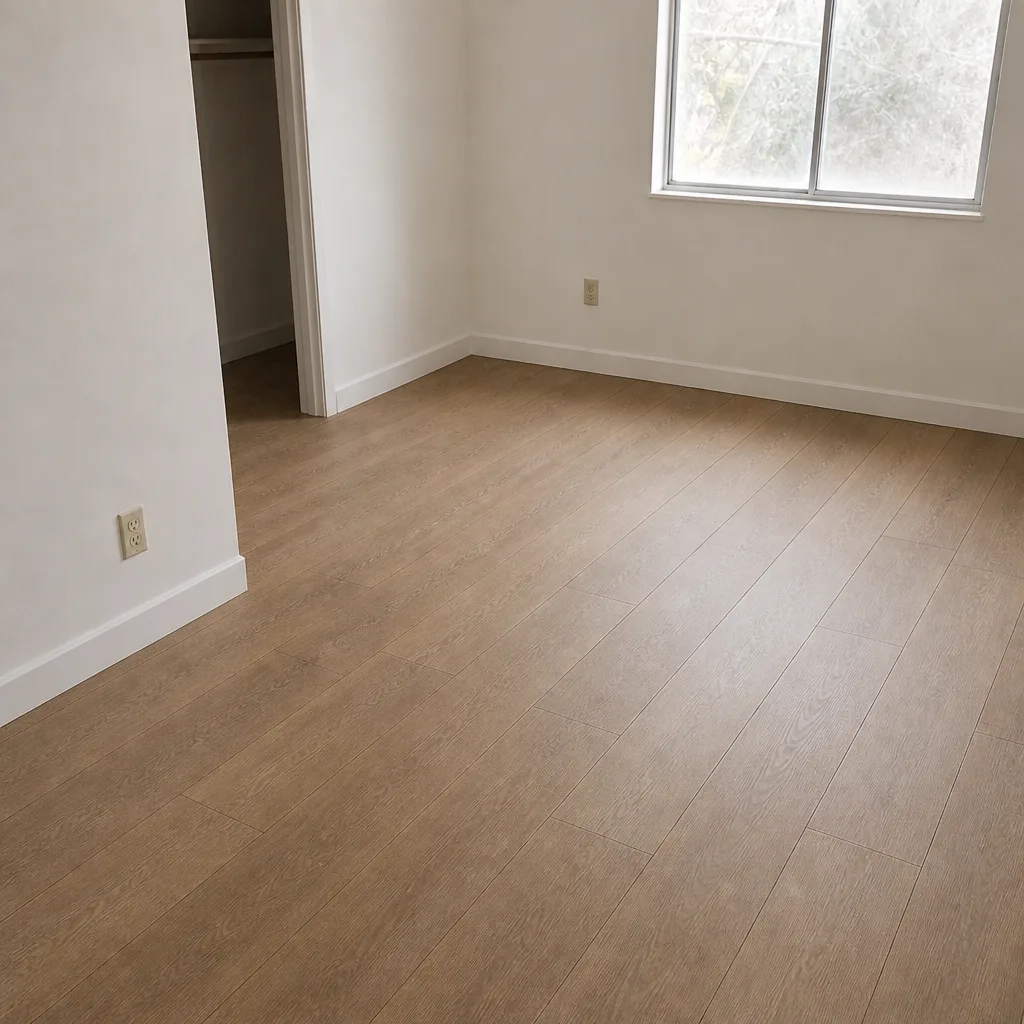 After
When to Call a Professional
Some flooring questions are worth a phone call rather than a guess. If your existing floor has soft or spongy spots, visible water staining, or a section that’s lifting, the condition underneath needs to be assessed before any new material goes down. If you’re planning a whole-home project that combines carpet, tile, and existing hardwood you’d like to refinish, you need one estimate that accounts for all of it rather than three contractors each assuming someone else handles the transitions. If you’ve had a leak or a plumbing repair and the flooring in that area hasn’t been right since, that’s a moisture question that needs real readings. And if you’ve gotten a quote that felt too low to be real, a second estimate from a specialist is a cheap way to find out what the first one left out.
Boulder City Flooring offers free estimates in Boulder City. Call (844) 560-5320 to schedule your free estimate and get a written, itemized price for your project.
Frequently Asked Questions
A free in-home flooring estimate typically takes 45 minutes to about an hour and a half, depending on how many rooms are involved and how much inspection the subfloor requires. A single room moves quickly. A whole-home project with multiple subfloor types and several transitions takes longer, because there’s more to examine and more questions to work through. Call (844) 560-5320 to schedule yours.
Yes, the in-home estimate is free and comes with no obligation to book the work. You get measurements, a subfloor assessment, product guidance, and a written itemized price. What you do with it is entirely your call. Call (844) 560-5320 for an exact quote at no cost.
No. You don’t need to move furniture before an estimate visit. The estimator can work around most furniture and will note what needs to be cleared before install day. If a piece is blocking access to a floor you want inspected, it helps to shift it, but that’s not a requirement for the estimate itself.
Have a rough sense of your budget range, a list of the rooms you’re considering, and any information you have about previous flooring work or past leaks. If you’ve already pulled photos or product ideas, bring them. None of it is required, but the more context you provide, the more specific the recommendation will be. Call (844) 560-5320 to set up the visit.
Pricing depends on the material, the square footage, the subfloor condition, and the prep required, which is why the written estimate sets the final price rather than a phone quote. Nothing gets priced until the estimator has seen the actual conditions. Call (844) 560-5320 for a free in-home estimate and a written range for your specific rooms.
Usually not over the phone, because it depends on the thickness of the wood and its condition, both of which get checked at the estimate visit. If you have original hardwood under carpet or tile, a refinish can be a better path than replacement, but that’s a judgment made after looking at the floor. Call (844) 560-5320 to schedule an assessment.
The Bottom Line
A free in-home flooring estimate is an assessment, not a sales call, and the difference shows in what the estimator examines and what they hand you afterward. Look for someone who checks the subfloor, takes moisture readings, measures door clearances, plans the transitions, and asks how you actually live in the space. Expect a written, itemized estimate that separates material from labor, names the product by brand, lists prep and disposal, and states what’s excluded. Use the visit to test the company’s knowledge with real questions about your conditions, and watch whether the recommendation follows your answers or follows the inventory. A thorough estimate takes time and costs nothing. The written estimate sets the final price, and no work gets booked until you’re satisfied with what’s on the page.
Call (844) 560-5320 to schedule your free estimate. We answer 24/7. Fast dispatch from 7am to 7pm, Sunday through Friday.
Written by the team at Boulder City Flooring.